December 17, 2020 1-3:00 pm
Brandon Horvath, Ph.D., Associate Professor of Turfgrass Pathology, University of Tennessee, Knoxville, Tennesee
John E. Kaminski, Ph.D., Professor, Turfgrass Management and Director of the Golf Course Turfgrass Management Program at Penn State University, State College, Pennsylvania
Frank S. Rossi, Ph.D., Associate Professor at Cornell University, Ithaca, New York
This session will be a focused discussion on the challenges associated with maintaining high performance cool-season turfgrass surfaces. We will discuss diseases, cultural practices, best management practices, and more to help you get more out of your cool-season turf surfaces. Bring your questions and enjoy a lively discussion.
You will learn about new chemistries and how to best employ chemistries, BMPs and other practices to help your turf achieve its full potential. You will also have the chance to discuss disease and turf management challenges in your area, and hear what these three experts would do to manage those challenges.
 |  |  |
| GCSAA Credits: .20 | BIGGA Credits: 2 | Pesticide Credits for these states: |
| DE: 2●, FL: 2, GA: 2, HI: 2, MA: 2, MD: 4 ●, NC: 2, NJ: 4, NY: 1.75, OH: 2, SC: 2, TN: 2, VA: ✔, DC: 2, CANADA IPM Pts: 1.25 | ||
| ✔ Must Take (2) Seminars See chart for details | ||
| ● Delaware & Maryland – Qualifies for 2 CEU’s for PFA |
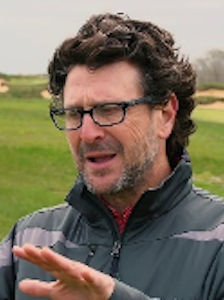
Dr. Frank Rossi (@fsr3) is an Associate Professor in the School of Integrative Plant Science at Cornell University where he leads the Urban Grassland Research and Education Program and teaches courses in plant science and food systems. He has published scientific books, chapters, articles, columns, videos, and podcasts, mostly because he can’t stop talking about grass. You can hear him on the popular “Frankly Speaking” Podcast @Turfnet.com.
Frank has had a long career advocating for excellence in environmental stewardship and is passionate about firm, fast, safe, playing surfaces. In fact, he was the lead agronomic consultant for the 2016 Olympic Golf Course in Rio de Janiero, Brazil and the grassland expert for historic venues in the New York metropolitan area such as Green-Wood Cemetery, Central Park, Bryant Park and Yankee Stadium. Frank has been recognized throughout his career among the most influential people in the Green Industry and won numerous awards including the 2018 GCSAA President’s Award for Environmental Stewardship.

John Kaminski, Ph.D., is an Professor in Turfgrass Management and Director of the Golf Course Turfgrass Management Program at Penn State University. He earned his B.S. at Penn State and his M.S. and Ph.D. at the University of Maryland. Kaminski’s research interests focus on golf course pest management and his university appointment includes 75 percent extension and 25 percent research. Kaminski’s standing in the turfgrass industry has been well-documented through the numerous awards he has received, including the Musser International Turfgrass Foundation Award of Excellence, the Watson Fellowship Award and the Award for Outstanding Collaboration between basic and applied research from the Potomac Chapter of the American Phytopathological Society.
He serves on the scholarship committee for the Penn State Department of Crop and Soil Science and has been an associate editor for the International Turfgrass Society Journal. In addition to many state and regional turfgrass conferences around the United States, Kaminski has lectured on multiple occasions in England, Scotland, Ireland, Netherlands, South Africa, Canada and Chile on topics relating to chemical and cultural management strategies to reduce turfgrass pests and improve playability. He has been a GCSAA faculty member since 2008.

Dr. Brandon Horvath, Ph.D., is Associate Professor of Turfgrass Pathology at the University of Tennessee. He joined the faculty May 1, 2009 in a role with 75 percent teaching and 25 percent research responsibilities. He earned his Ph.D. in Turfgrass Science from Michigan State University. Horvath’s research interests include the epidemiology of turfgrass pathogens and the development of strategies based upon epidemiological research to manage turfgrass diseases.