BMP HERO! Scene 1: “Bees, Buffers, and Bourbon”

December 16, 2020 1-3:00 pm         

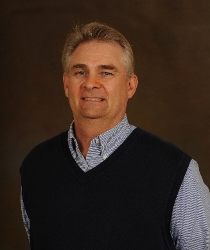
Gina D. Rizzi, President of ARCUS Marketing Group and Radius Sports Group, San Francisco, California

Yes, that’s right – these three things have something in common. BMPs! Another BMP talk? C’mon, we’ve been talking about this stuff for years now. True. And it matters. It makes a difference for our courses, our industry, our communities and the environment. But this talk, well, it’s different.

This installment of BMP HERO!Bees, Buffers, and Bourbon shows why this effort is so critical – not only for golf course operations and environmental stewardship, but also for community and government relations. By the end of 2020, all 50 U.S. states will have published BMP guides. Superintendents have an opportunity to build on the national and state efforts, now at the facility-level.

While superintendents are being good environmental stewards and working toward optimal performance standards, green roofs and urban gardens are gaining recognition worldwide for the community value they provide – golf course superintendents play a leading role within this story. Golf courses positively impact communities through providing ecosystem services like pollinator and wildlife habitats, stormwater management, and reduction in the urban heat island effect. We will explore the current needs across our communities that the industry helps address through effective BMP adoption, communication and engagement.

And the Bourbon? Not just a catchy title … what a BMP story! For added fun, we will take a quick stroll down the bourbon trail correlating key BMPs that make a whiskey a bourbon and why these are crucial for quality, credibility and continuity. Assuming many of you will be in the comfort of your own home, tastings are at your discretion.

Expect an enjoyable, entertaining, and educational session.

This image has an empty alt attribute; its file name is GCSAACreditsLeaf.pngThis image has an empty alt attribute; its file name is BIGGALogoForCredits.pngThis image has an empty alt attribute; its file name is PestisidesCreditsLeaf.png
GCSAA Credits: .20BIGGA Credits: 2Pesticide Credits for these states:
FL: 2, MA: 2, MD: 4,
VA: ✔, DC: 2,
CANADA IPM Pts: 1.25
✔ Must Take (2)
Seminars
See chart for details

Gina Rizzi, President of ARCUS Marketing Group and Radius Sports Group, is a speaker and passionate advocate for helping organizations drive innovation and financial performance while positively impacting society and the environment. Founded in 2010, ARCUS drives marketing strategy, sports marketing, media and corporate social responsibility initiatives for Fortune 500 companies. Radius, a wholly-owned subsidiary, provides sustainability consulting within golf and sports, including BMP development with GCSAA state chapters and facilities.

Gina received her M.B.A., Cum Laude, from the University of Notre Dame, B.A. Advertising, High Honors, from Michigan State, Certificates in GRI Sustainability Reporting Standards, Sustainable Energy Management from Presidio Graduate School, and Sustainability Best Practices from the Global Business Travel Association. She is a member of the U.S. Green Building Council, WE ARE GOLF Diversity Task Force, and a GCSAA affiliate member.
Holy Grail – Cool Season

December 17, 2020 1-3:00 pm

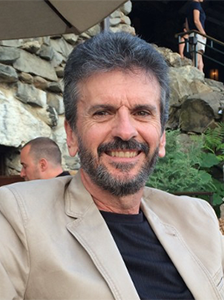
Brandon Horvath, Ph.D., Associate Professor of Turfgrass Pathology, University of Tennessee, Knoxville, Tennesee

John E. Kaminski, Ph.D., Professor, Turfgrass Management and Director of the Golf Course Turfgrass Management Program at Penn State University, State College, Pennsylvania

Frank S. Rossi, Ph.D., Associate Professor at Cornell University, Ithaca, New York

This session will be a focused discussion on the challenges associated with maintaining high performance cool-season turfgrass surfaces. We will discuss diseases, cultural practices, best management practices, and more to help you get more out of your cool-season turf surfaces. Bring your questions and enjoy a lively discussion.

You will learn about new chemistries and how to best employ chemistries, BMPs and other practices to help your turf achieve its full potential. You will also have the chance to discuss disease and turf management challenges in your area, and hear what these three experts would do to manage those challenges.

This image has an empty alt attribute; its file name is GCSAACreditsLeaf.pngThis image has an empty alt attribute; its file name is BIGGALogoForCredits.pngThis image has an empty alt attribute; its file name is PestisidesCreditsLeaf.png
GCSAA Credits: .20BIGGA Credits: 2Pesticide Credits for these states:
DE: 2●, FL: 2, GA: 2,
HI: 2, MA: 2, MD: 4 ●,
NC: 2, NJ: 4, NY: 1.75,
OH: 2, SC: 2, TN: 2,
VA: ✔, DC: 2,
CANADA IPM Pts: 1.25
✔ Must Take (2)
Seminars
See chart for details
● Delaware & Maryland –
Qualifies for 2 CEU’s for PFA

Dr. Frank Rossi (@fsr3) is an Associate Professor in the School of Integrative Plant Science at Cornell University where he leads the Urban Grassland Research and Education Program and teaches courses in plant science and food systems. He has published scientific books, chapters, articles, columns, videos, and podcasts, mostly because he can’t stop talking about grass. You can hear him on the popular “Frankly Speaking” Podcast @Turfnet.com.  

Frank has had a long career advocating for excellence in environmental stewardship and is passionate about firm, fast, safe, playing surfaces. In fact, he was the lead agronomic consultant for the 2016 Olympic Golf Course in Rio de Janiero, Brazil and the grassland expert for historic venues in the New York metropolitan area such as Green-Wood Cemetery, Central Park, Bryant Park and Yankee Stadium. Frank has been recognized throughout his career among the most influential people in the Green Industry and won numerous awards including the 2018 GCSAA President’s Award for Environmental Stewardship. 

John Kaminski, Ph.D., is an Professor in Turfgrass Management and Director of the Golf Course Turfgrass Management Program at Penn State University. He earned his B.S. at Penn State and his M.S. and Ph.D. at the University of Maryland. Kaminski’s research interests focus on golf course pest management and his university appointment includes 75 percent extension and 25 percent research. Kaminski’s standing in the turfgrass industry has been well-documented through the numerous awards he has received, including the Musser International Turfgrass Foundation Award of Excellence, the Watson Fellowship Award and the Award for Outstanding Collaboration between basic and applied research from the Potomac Chapter of the American Phytopathological Society. 

He serves on the scholarship committee for the Penn State Department of Crop and Soil Science and has been an associate editor for the International Turfgrass Society Journal. In addition to many state and regional turfgrass conferences around the United States, Kaminski has lectured on multiple occasions in England, Scotland, Ireland, Netherlands, South Africa, Canada and Chile on topics relating to chemical and cultural management strategies to reduce turfgrass pests and improve playability. He has been a GCSAA faculty member since 2008.

Dr. Brandon Horvath, Ph.D., is Associate Professor of Turfgrass Pathology at the University of Tennessee. He joined the faculty May 1, 2009 in a role with 75 percent teaching and 25 percent research responsibilities. He earned his Ph.D. in Turfgrass Science from Michigan State University. Horvath’s research interests include the epidemiology of turfgrass pathogens and the development of strategies based upon epidemiological research to manage turfgrass diseases.

POA Update with Dr. Bert McCarty and Dr. Fred Yelverton

Poa Update

Dr. Bert McCarty and Dr. Fred Yelverton

January 28, 2021 1-3:00 pm EST

Please join Dr. Bert McCarty while he asks Dr. Fred Yelverton about the latest updates on poa control strategies under all situations or conditions.  Dr. McCarty will host the session and there will be time for questions at the end.

This is a free session brought to you by the Carolinas GCSA in partnership with the turf teams at Clemson University and North Carolina State University. 

**Due to short notice, no pesticide credits are offered

Bert McCarty is a Professor of Horticulture specializing in turfgrass science and management at Clemson University in Clemson, South Carolina (USA). Previously, he held a similar position at the University of Florida. He has published numerous articles dealing with all phases of turfgrass management and is an oft requested speaker. He is currently authors or co-authors 11 books, is a co-author for the GCSAA seminars, Weed Control, Advanced Weed Management, Advanced Management of Bermudagrass Golf Greens, and Advanced Management of Bentgrass Golf Greens and is active in a number of professional societies. He has authored or coauthored 93 book chapters, 114 refereed journal articles, 166 Public Service Activities/Extension Publications, 219 (since 2000) trade journals, 34 annual research reports, and 590 Scientific Presentations/Abstracts. In addition, he has chaired 37 graduate students and been a committee member for 30 more. He currently chairs 2 PhD candidates and 2 MS students. He also teaches the course, Advanced Turfgrass Management, and is coordinating author of Clemson University Annual Pest Control Recommendation Guide for Professional Turfgrass Managers. In 2012, he won the prestigious Godley-Snell Award for Excellence which is given to the top agriculture researcher at Clemson University and in 2010 and 2013, the Notable State Document Award from the SC State Documents Depository System from over 3000 entries. In 2014, he was the recipient of the Fred Grau award through the Crop Science Society as the top national and international turfgrass science researcher and is a Societal Fellow, the highest recognition by the society. He was selected as a Fellow for the American Society of Agronomy in 2016. This was the first recipient of either award by a Clemson University professor. He has received CUs Board of Trustees Award for Excellence three times.

Fred Yelverton, PhD, has been a faculty member at North Carolina State University for 36 years.  Since 1995, he has been a professor of turfgrass science in the Crop Science department at NCSU.  His specialties include turfgrass weed management, turfgrass management, plant growth regulators, and weed biology and ecology. His speaking engagements have taken him to 48 states and 25 countries on six continents.  He has taught seminars at CGCSA and GCSAA every year since 1995.